Selected as one of two best projects at Complexity Global School 2025 conducted by Santa Fe Institute, USA, held at Universidad de Los Andes, Bogota, Colombia, South America
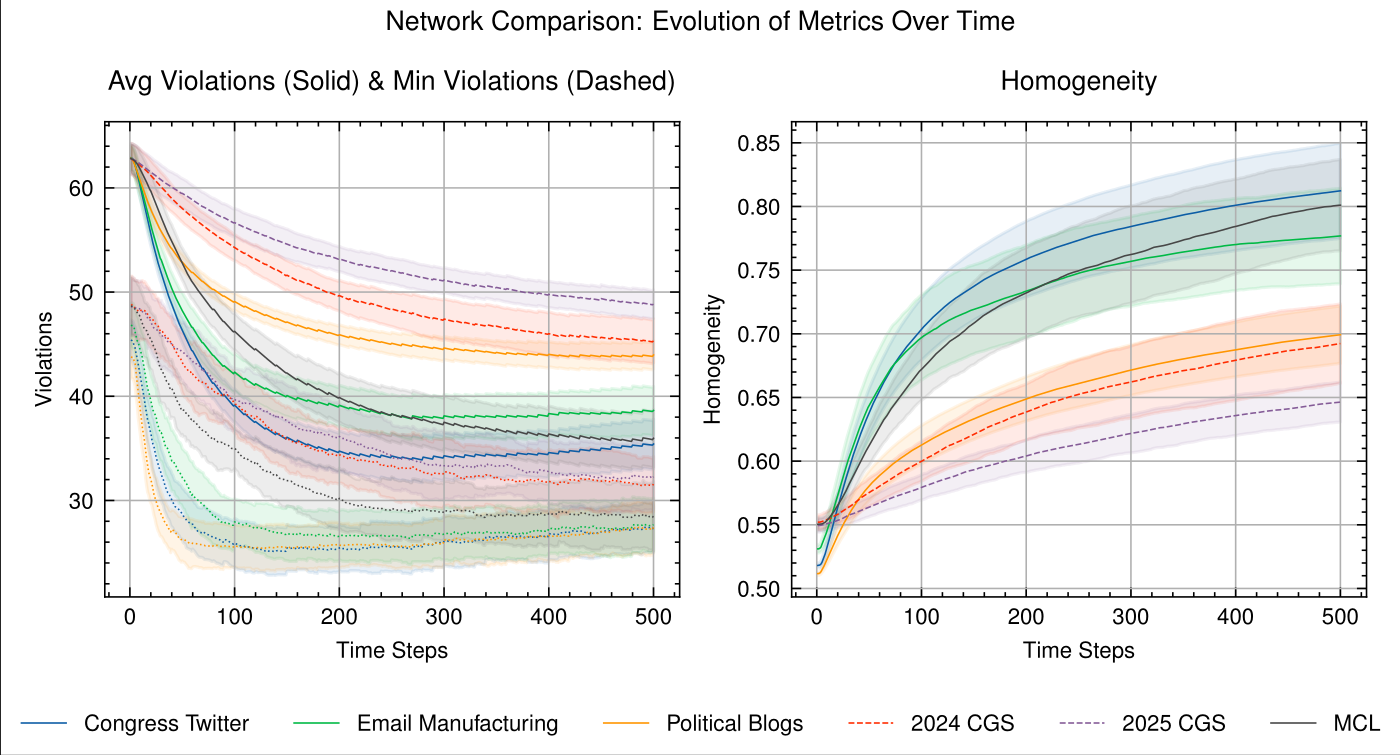
Model performing on various empirical networks Co-authors: Fausto Gernone,Pia Andres and Ariane Donda
📓 Abstract
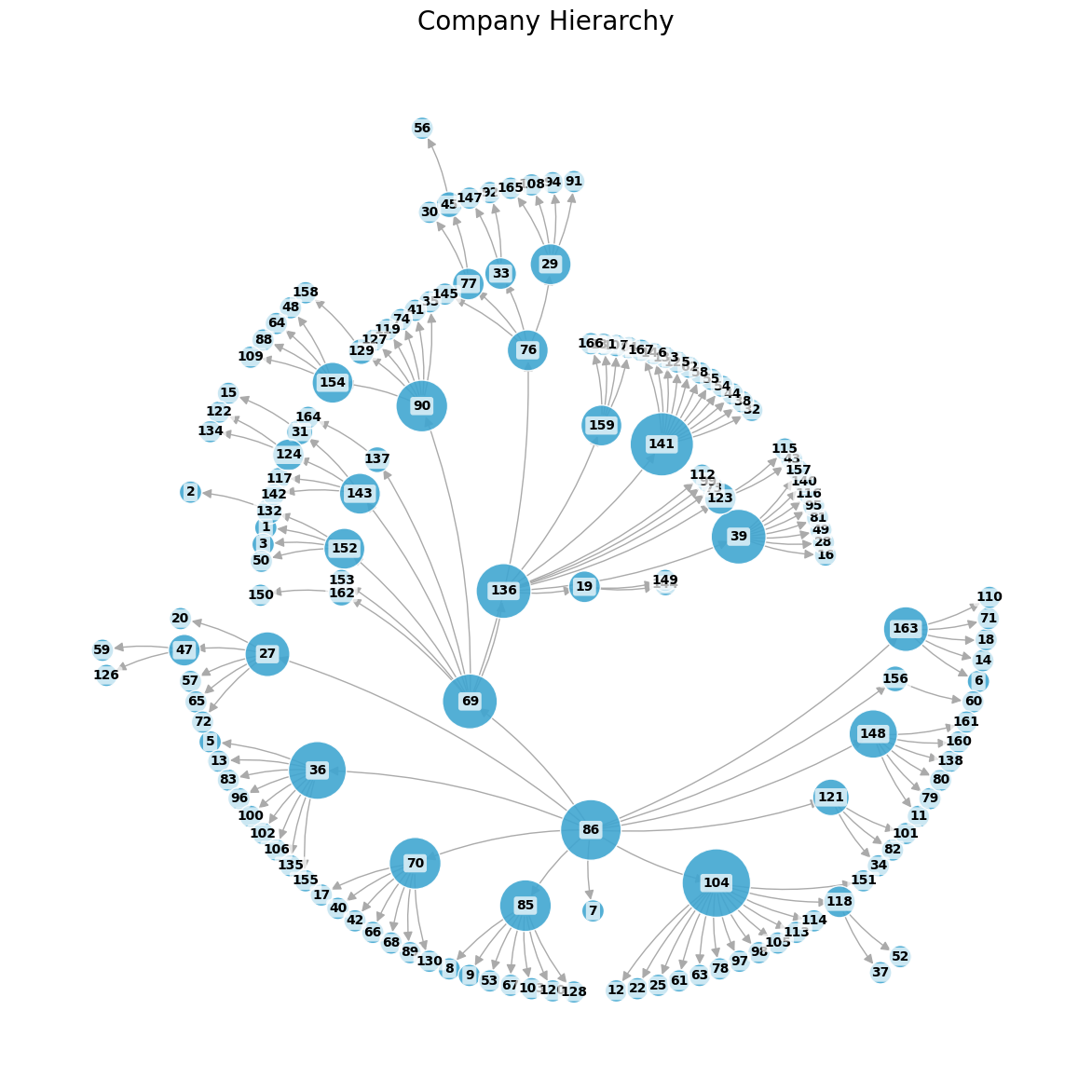
Individuals and organizations are continually tasked with complex decisions under incomplete information. We present an agent-based model of distributed problem solving in which individuals face a shared Boolean satisfiability task. Agents hold only partial knowledge of the underlying logical constraints and update their binary policy choices through local greedy repairs whenever they acquire new clauses, either from direct observation or communication within a fixed network. Because behavioral assumptions are intentionally simple and homogeneous, all systematic variation in collective performance arises from network structure. Using this framework, we evaluate several real-world communication networks – including Twitter interactions between legislators and corporate email exchanges – on their ability to support accurate and coherent problem solving. Dense, reciprocal, and well-integrated networks converge to low violation counts and high homogeneity, whereas sparse or community-segmented networks trap information locally, hindering the discovery of consistent solutions. Node-level patterns reveal strong performance advantages for central agents, which we validate using managerial data from a manufacturing firm. Finally, rewiring experiments show that modest increases in inter-community connectivity can yield substantial performance gains. Taken together, these results highlight general design principles linking network topology to collective intelligence.
Co-Authors:Matthew Bone, Paula Camargo Scoppetta, Jeanne Pais, Maria Camila Patiño, Francisco Richter Mendoza
📓 Abstract
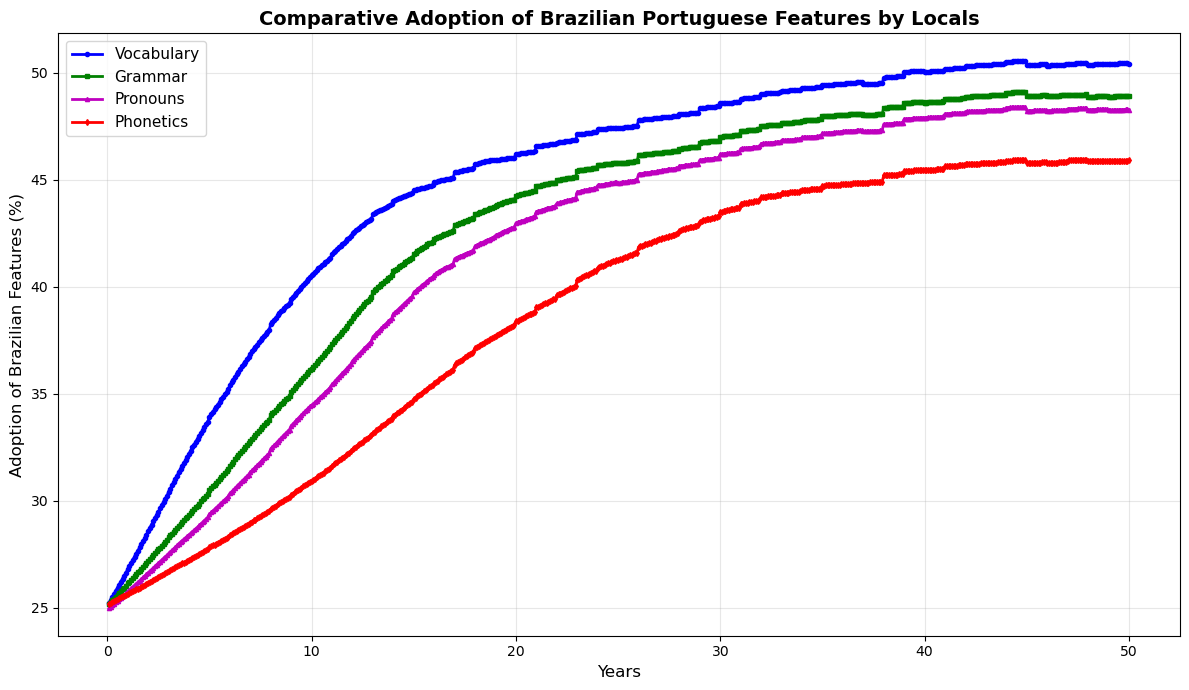
Language change provides a measurable lens on cultural evolution. We study this process through the impact of Brazilian media and immigration on Portugal, where a shared language carries colonial legacies and facilitates cultural exchange. Contemporary immigration and Brazilian media circulation expose Portuguese residents to alternative linguistic norms, generating a natural experiment in diffusion. We curate longitudinal news corpora and fine-tune a language model for dialect classification to track Brazilian Portuguese usage in Portuguese news outlets between 2010 and 2024. We use these empirical traces to calibrate a language-evolutionary agent-based model that represents households, schools, workplaces, and public venues across Portuguese districts. The model evaluates how migration inflows, media exposure, and identity disclosure can influence language among locals. Results show that media contact and work-focused integration policies may yield the largest gains in adoption, while mutual openness in identity expression can further accelerate diffusion. Our approach highlights how policy-relevant levers shape linguistic change and cultural evolution in Portugal.
Interactive Web Application (developed by Francisco with additions from em): Link
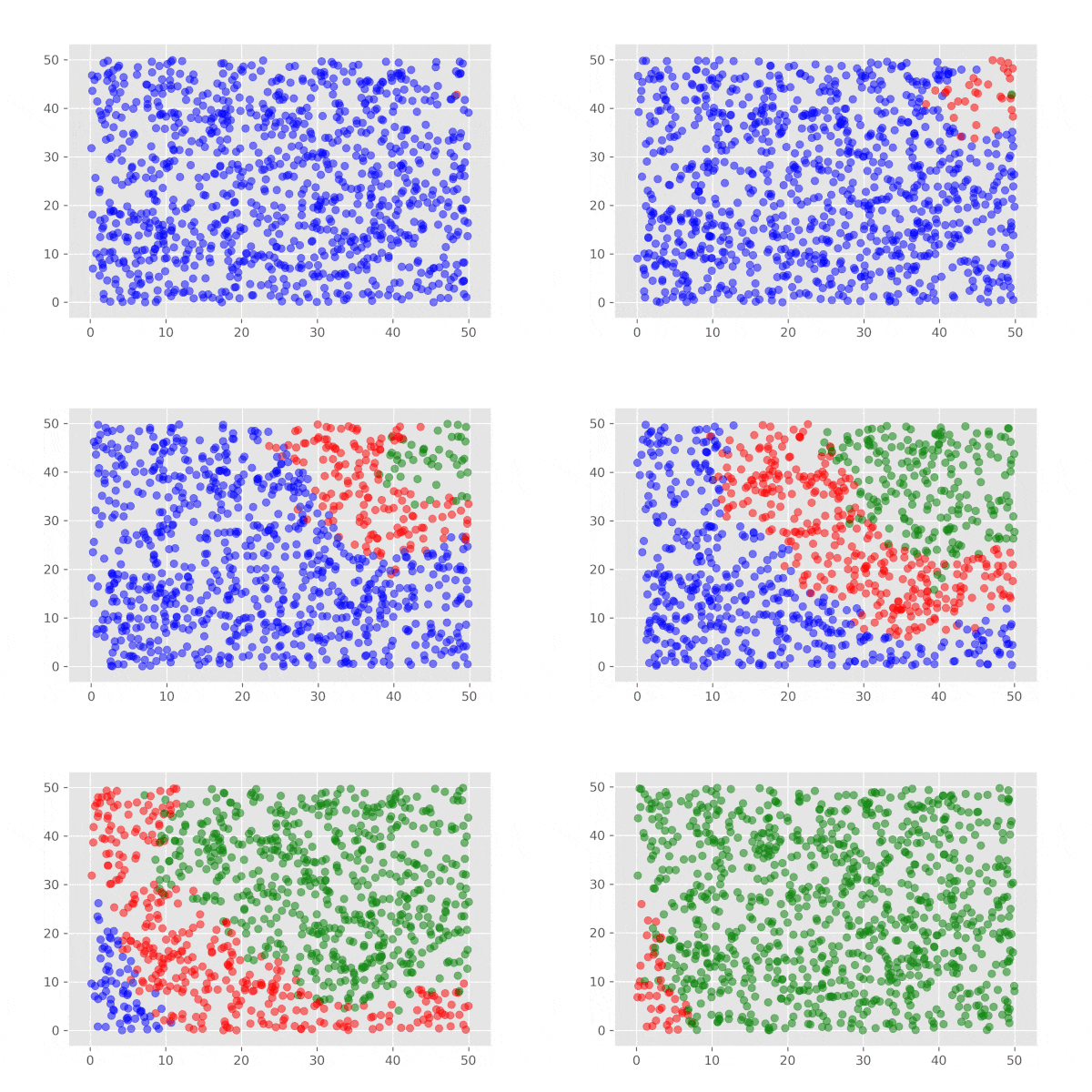
The worldwide pandemic response to the SARS-CoV-2 coronavirus has varied greatly from region to region with many countries implementing stay-at-home restrictions and travel bans to curb human mobility in an attempt to limit vectors for disease transmission. We attempt to quantify the effectiveness of these policies within heterogeneous networks via stochastic agent-based modelling of human mobility and the emergent spatial effects within communities that follow. Examined in this work are movement patterns between home, work, public transit, and central marketplace locations under a spectrum of public lock-down and quarantine policies, simulated within the ABM and compared via case study to data from the current outbreak. We found diminishing returns in the effectiveness of these strategies as a function of their implementation time.
Project Undertaken as part of online school: Introduction to Agent-Based Modeling (Conducted by Santa Fe, USA)
Click here to go to the documentation of the NetLogo model.
📓 Abstract
A a model of an artificial economical system made up of firms/factories. This is an attempt to develop a simple enough model to capture some aspects of production in various firms. Each firm is an agent that can generate a unique product or goods. The economy evolves and we study emergent properties that the system end up showing.